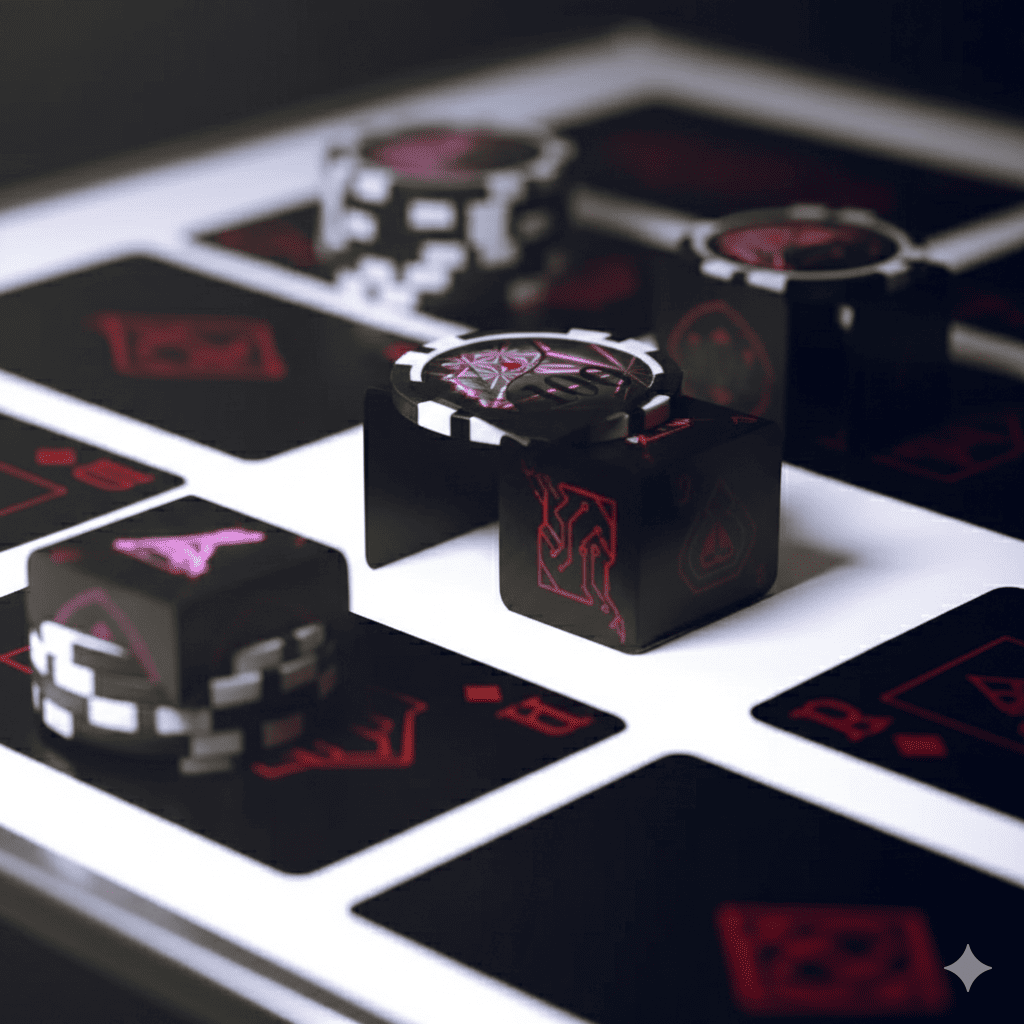
I have spent the last decade looking at spreadsheets that track user engagement, and I have noticed a disturbing trend. The engagement is flattening. The transition from desktop to mobile was the first great revolution of our industry. It put the casino in your pocket. But for the last five years, we have essentially been refining the same product. A 2D slot machine on a 6-inch screen is still just a 2D slot machine. It is convenient, yes, but it is not magical. It lacks the visceral weight of the physical casino floor. This is why, inside our research and development labs, we are no longer focused on making better screens. We are focused on breaking the screen entirely. The next revolution is here, and it is powered by the camera on the back of your phone. The AR mobile casino is not just a gimmick; it is the inevitable bridge between the digital convenience of online play and the atmospheric thrill of a real-world resort.
In this article, I am going to take you through the specific Augmented Reality features we are building, testing, and rolling out. I will explain how we are using LiDAR scanning to place roulette tables on your coffee table, how we are using computer vision to read your hand gestures, and how the very concept of a “User Interface” is about to disappear. We are moving from the age of information to the age of immersion.
The Anchor Point: Placing the Casino in Your World
The fundamental technology behind AR is SLAM (Simultaneous Localization and Mapping). This allows your phone to understand the geometry of the room you are standing in. In the past, this was shaky. Virtual objects would drift or float away. Today, thanks to advanced sensors in modern smartphones, we can “anchor” a digital object to a physical surface with sub-millimeter precision.
The Virtual Tabletop
The most immediate application is the table game. Imagine you are sitting in your living room. You hold up your phone and point it at your coffee table. Our app scans the surface, detects the flat plane, and instantly renders a high-fidelity, 3D Roulette wheel or Blackjack table onto the wood.
This is not a static image. It is a fully rendered 3D object with physics. You can physically walk around the table. If you move your phone closer, you can inspect the texture of the felt or the grain on the wooden wheel. If you move to the side, you see the game from a different angle. This introduces the concept of “natural navigation.” You don’t swipe the screen to change the view; you move your body. This physical engagement tricks the brain into believing the object is real, releasing a higher level of dopamine than a flat 2D sprite ever could.
Lighting Estimation and Realism
To make this illusion work, we use real-time lighting estimation. The camera analyzes the light sources in your actual room. If you have a lamp on the left side of your coffee table, the virtual roulette wheel will cast a shadow to the right. The gold accents on the wheel will reflect the actual light temperature of your room.
This level of detail creates a sense of “object permanence.” The game doesn’t feel like a video game; it feels like a piece of furniture that has magically appeared in your home. It grounds the gambling experience in your reality, making it feel more tangible and, paradoxically, more serious.
The Death of Buttons: Gesture Control and Spatial UI
One of the biggest limitations of mobile gambling is the screen real estate. If I put a complex Craps table on a phone screen, half the screen is covered by buttons (Bet, Roll, Clear, Repeat). It creates a cluttered, claustrophobic experience. AR allows us to explode the interface into the air surrounding the device.
Hand Tracking Integration
We are currently testing features that utilize the neural engines in modern phones to track your hands without the need for controllers or touching the screen. In an AR Blackjack game, you don’t tap a “Hit” button. You simply tap the physical table in front of you, just like you would in Las Vegas. To “Stand,” you wave your hand over the virtual cards.
The camera sees your hand, interprets the gesture, and executes the command. This removes the abstraction of the interface. You are no longer interacting with software; you are interacting with the game itself. It speeds up gameplay and reduces the cognitive load of hunting for small buttons on a small screen.
Floating Information Layers
For games like Poker, information is power. In a traditional app, checking the paytable or your hand history requires navigating away from the game or opening a popup that blocks the view. In AR, we place this information in “floating windows” that hang in the air around the table.
You can turn your head (or your phone) to the left to see the payout structure floating in space. Look to the right to see the lobby chat. The main view remains unobstructed. We are effectively giving the user a multi-monitor setup using only a single mobile phone screen. This “Spatial UI” allows us to present deep, complex data without overwhelming the player.
The Volumetric Live Dealer
Live Dealer games are currently the fastest-growing segment of our portfolio. Players love seeing a human being. However, currently, that human is trapped in a video rectangle. With the advent of 5G and volumetric capture, we are changing the geometry of the broadcast.
The Holographic Croupier
Instead of filming the dealer with a standard camera, we film them with an array of cameras in a green-screen studio. This captures them as a 3D volume rather than a flat image. We stream this data to your phone.
In the AR mode, the dealer is projected standing behind your virtual table. Because it is volumetric data, you can look at them from different angles. If they reach out to deal a card, their hand seems to extend over your coffee table. We are breaking the fourth wall. The dealer is visiting you.
This creates a powerful psychological connection. It feels intimate and exclusive. It replicates the VIP experience of a private salon. We are also experimenting with “Green Screen Removal” where the dealer is extracted from the studio background and placed into your environment, so it looks like they are standing in your kitchen, dealing cards on your counter.
Gamification of the Real World: The “Geo-Drop”
AR is not limited to table games. We are looking at how to turn the world itself into a casino lobby using location-based AR, similar to how Pokemon Go changed mobile gaming.
Hunting for Bonuses
Imagine opening your casino app and seeing a map of your city. You see a glowing icon down the street. You walk to that location, hold up your phone, and looking through the camera, you see a floating “Mystery Chest” or a “Free Spin Token” hovering near a landmark. You tap it to collect it.
This “Geo-Drop” technology allows us to engage players when they are not actively gambling. It turns the daily commute into a treasure hunt. It allows us to partner with physical locations. We could drop a special bonus inside a sports stadium during a match, accessible only to people physically present who scan the field with our app. This merges the digital wallet with the physical footprint.
The Portal Mechanic
We are also using “Portal” rendering. You scan a doorframe in your house. On your phone screen, that doorframe becomes a glowing portal. If you walk “through” it (physically walking forward with your phone), the screen transitions from your living room to a fully rendered 3D lobby of a 1920s Art Deco casino.
You can walk around this virtual lobby, inspect the slot machines, and choose a game. It is a way to transport the user instantly from their mundane surroundings to a glamorous environment, using their own physical movement as the transition mechanic.
Social AR: The Avatar at the Table
Online gambling is lonely. You are playing against an algorithm or a distant dealer. AR allows us to bring the other players into your space.
Shared Spatial Coordinates
If you are playing a multiplayer AR Roulette game with friends, we can synchronize the coordinate systems of your phones. If your friend sits opposite you at the physical table, their avatar appears opposite you on your screen.
You can see their avatar place chips on the virtual table. If they win, their avatar celebrates. We are working on facial mapping that uses the front-facing camera to map your real expressions onto your avatar in real-time. If you smile, your avatar smiles at your friend. If you frown at a bad beat, your avatar frowns. This reintroduces the “poker face” and the social cues that are lost in standard online play.
The Hardware Evolution: Preparing for the Glasses
While we are building these features for smartphones (iOS and Android), we all know that the phone is a transitional device. The end game is AR Glasses (like the Apple Vision Pro or Meta’s future Orion glasses).
The Always-On Casino
Everything we are building today is “forward compatible.” The high-fidelity 3D assets, the gesture control systems, and the spatial audio engines are designed to be ported instantly to wearable headsets.
When glasses become mainstream, the casino will be a “layer” on top of reality. You might be watching a real horse race at the track. Your glasses recognize the horses and overlay the live odds above their heads as they run. You blink to place a bet. This seamless integration of betting data into the real-world event is the holy grail of our industry. We are building the software infrastructure for that future right now on mobile.
Spatial Audio: Hearing the Room
Visuals get all the attention in AR, but audio is half the experience. We use “Binaural Audio” engines in our AR apps. This tracks the position of the virtual object relative to your head.
If the virtual slot machine is to your left, the sound of the spinning reels comes only into your left earbud. If you turn to face it, the sound centers. If you walk away from it, the sound gets quieter (distance attenuation).
This audio anchoring helps the brain accept the illusion. It allows you to locate games by sound. In a virtual AR lobby, you might hear the roar of a Craps table behind you, prompting you to turn around and explore. It creates a 360-degree soundscape that makes your quiet living room sound like the floor of the Bellagio.
Challenges: The Heat and the Battery
I must be honest about the technical hurdles. AR is heavy. It requires the camera, the gyroscope, the accelerometer, the GPU, and the Neural Engine to all fire simultaneously.
Thermal Throttling
Early versions of our AR apps would overheat a phone in 15 minutes. The processor simply creates too much heat rendering 3D objects on top of a live 4K camera feed. We have had to develop aggressive optimization techniques. We use “Variable Rate Shading” to lower the graphical fidelity of the virtual object in areas where your eye is not focused. We cap frame rates when the device gets hot.
Battery Drain
Battery consumption is massive. An hour of AR gameplay can drain 50 percent of a battery. We are combating this by offloading some of the heavy lifting to the cloud via 5G edge computing, but the camera sensor itself is a power hog. Currently, AR is best for short, intense sessions-a quick few spins or a few hands of blackjack-rather than marathon grinding.
Safety and Responsibility in an Immersive World
There is a unique safety concern with AR. We don’t want people walking into traffic because they are chasing a floating bonus. We don’t want people knocking over vases because they are waving their hands at a virtual Blackjack dealer.
Environmental Awareness
Our apps use the phone’s depth sensors to detect obstacles. If you are backing up to see the slot machine better and you are about to hit a wall or a chair, the app flashes a “Watch Out” warning and fades the virtual world to transparency.
From a Responsible Gambling perspective, AR offers powerful new tools. We can visualize your spending. Instead of just a number on a screen, we can show your “Loss Limit” as a physical stack of chips that gets smaller. When the stack is gone, you are done. This visual representation of money is often more impactful than a digital counter. We can also overlay “Reality Checks” that float in your field of view, reminding you of the time, ensuring you don’t get too lost in the simulation.
The Skeuomorphic Revival
For years, design has been “flat.” Minimalist. AR demands a return to “Skeuomorphism”-design that mimics real-world materials.
A virtual poker chip in AR needs to look like plastic and clay. It needs to have scratches. It needs to reflect light. If it looks like a flat circle, it breaks the immersion. We are hiring 3D artists from the movie industry to create assets that are “photoreal.” We are simulating the physics of dice rolling on different surfaces. Dice rolling on your wooden table should bounce differently than dice rolling on your carpet. Our physics engine detects the surface material and adjusts the bounce accordingly. This obsession with detail is what sells the fantasy.
The Marketing Potential: Try Before You Fly
We are also using AR as a marketing tool for our land-based partners. We can scan a high-roller suite in Las Vegas and let a player in London walk around it in AR in their living room.
They can see the view from the balcony, inspect the amenities, and virtually sit at the private gaming table in the room. It is the ultimate “try before you buy” experience. We can bring the physical resort to the remote player, enticing them to book a trip.
Conclusion: The Screen is Just a Window
The era of the static grid of icons is ending. The “Casino in Your Pocket” is evolving into the “Casino in Your Room.”
Augmented Reality allows us to bring the magic, the social connection, and the tactile joy of gambling back to the digital player. It transforms the phone from a device you stare at into a device you look through.
We are still in the early days. The glasses are coming. The processors are getting cooler. The batteries are getting better. But the software we are deploying today is laying the groundwork for a future where the line between the digital game and the physical world is completely erased.
So, clear off your coffee table. Make some space in your living room. The casino is coming over, and it is going to look more real than you ever imagined.